call us now
+91********56
Enquiry
Call Center:
+91********56
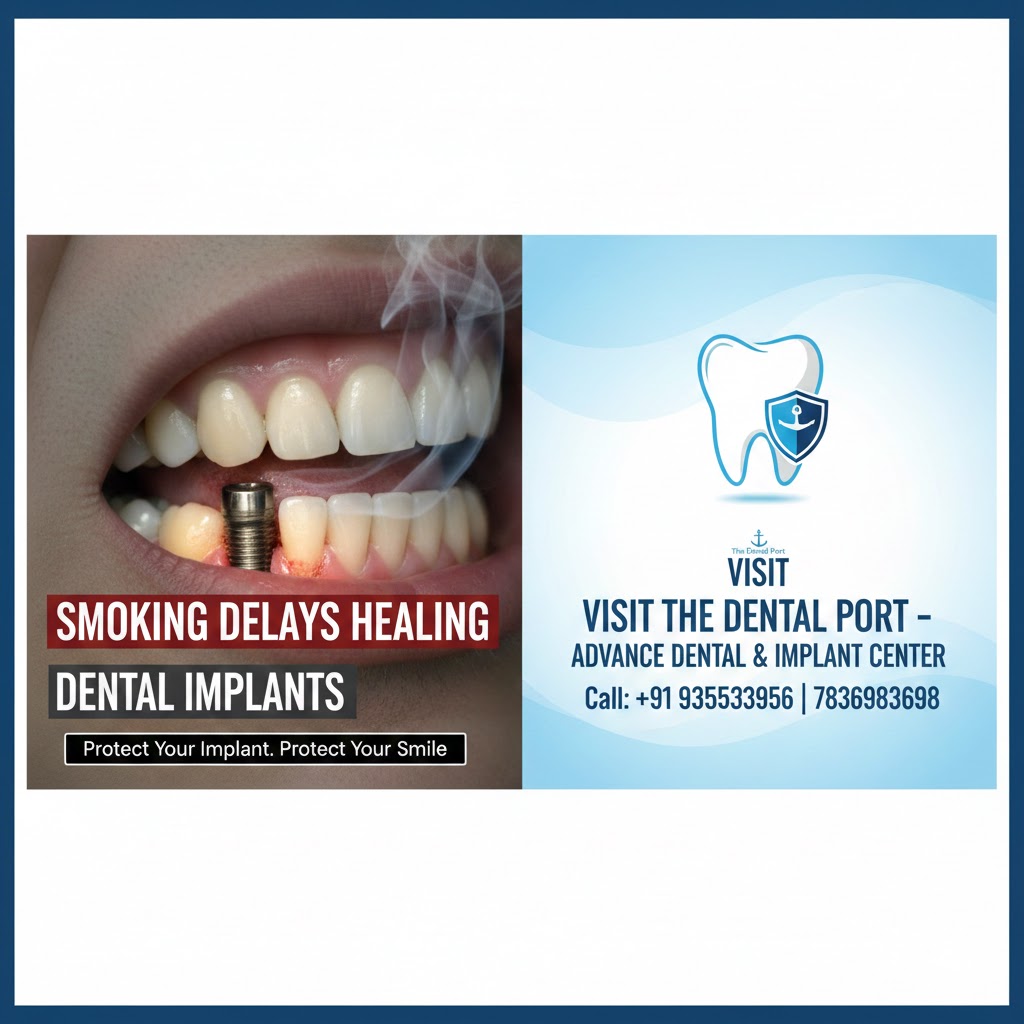
How Smoking Affects the Healing Process After Dental Implant Surgery
The Dental Port – Advance Dental & Implant Center
Call us: +91 9355333956, 7836983698
Getting dental implants is one of the most reliable ways to restore missing teeth and improve long term oral health. However, the success of your implant depends on how well your body heals after the procedure. While most patients heal without complications, certain habits can slow recovery and increase the risk of implant failure. Smoking is one of the biggest concerns because it affects the body’s natural healing ability.
At The Dental Port, we want our patients to understand how smoking influences healing and what steps smokers can take to protect their investment.
In this blog you will learn:
• The healing stages after dental implant surgery
• How smoking slows down recovery
• Why smokers face a higher risk of implant failure
• Practical tips for smokers planning dental implants
The Healing Process After Dental Implant Surgery
Dental implants work by placing a titanium post inside the jawbone to support a natural looking crown. Once the implant is placed, the body begins a healing process that takes time and proper care.
Osseointegration
This is the stage where the bone grows around the titanium implant. It usually takes a few months and is the most important part of healing. Successful osseointegration gives the implant strength and stability. Anything that slows bone growth can put the implant at risk.
Healing of the Gums
The gums need to heal around the implant so they can form a protective seal. Healthy gum tissue keeps bacteria from reaching the implant. If the gums do not heal well, infections can develop and the implant may loosen.
Why Blood Flow Matters
Healing depends on good blood flow because blood brings oxygen, nutrients, and immune cells to the surgical site. When circulation is poor, the body heals more slowly and infections become more likely.
Smokers face challenges in all these areas, which is why quitting or reducing smoking before the surgery is strongly recommended.
How Smoking Affects the Healing Process
Smoking exposes the body to nicotine and many other harmful chemicals. These substances interfere with healing in several ways.
Reduced Blood Circulation
Nicotine causes blood vessels to tighten, which limits the amount of oxygen and nutrients reaching the implant site. When oxygen levels drop, tissues struggle to repair themselves. This delay increases pain, swelling, and the chance of complications.
Weakened Immune Response
A strong immune system is essential after surgery. Smoking reduces the number of white blood cells, which are needed to fight bacteria. This makes smokers more vulnerable to infections such as peri implantitis.
Slower Bone Formation
For the implant to become stable, new bone must grow around it. Smoking slows down bone cell activity and reduces bone density. Because of this, smokers often experience weaker bone support and a higher rate of implant failure.
Increased Dry Mouth
Smoking reduces saliva flow, which leads to dry mouth. Saliva helps wash away bacteria and protects the gums. When saliva is lacking, bacteria multiply faster, and this increases the risk of infection and delayed healing.
Higher Risk of Implant Failure in Smokers
Because smoking affects circulation, bone healing, and gum recovery, it increases implant failure rates significantly.
Poor Osseointegration
When bone does not heal properly, the implant cannot become stable. This may cause the implant to loosen or fail completely.
Peri Implantitis
Smokers are at greater risk of this gum infection, which causes bone loss around the implant. Without treatment, peri implantitis can lead to removal of the implant.
Slower Healing of Soft Tissues
Nicotine reduces collagen production, which is important for gum healing. As a result, the gums may not close properly around the implant. This leaves openings where bacteria can enter.
Long Term Problems
Even if the implant heals initially, continuing to smoke can cause gum recession, bone loss, and implant mobility over time. Repairing these problems may require bone grafting or implant replacement.
Tips for Smokers Planning Dental Implants
Smokers can still get dental implants, but following the right steps is important to protect the results.
Quit or Reduce Smoking Before Surgery
Patients are encouraged to stop smoking at least one to two weeks before the procedure and continue avoiding smoking for two to three months afterward. This allows the body to heal faster and more effectively.
Be Cautious With Nicotine Products
Nicotine gums, patches, and vapes may reduce exposure to smoke, but nicotine itself can still slow healing. Always speak with your dentist or doctor before using any nicotine replacement product during the healing period.
Maintain Excellent Oral Hygiene
Good oral care plays a major role in preventing infections.
• Brush twice a day with a soft toothbrush
• Clean between teeth daily
• Use an antibacterial mouth rinse
• Visit your dentist regularly for checkups and cleaning
Follow All Post Operative Instructions
After surgery, follow the guidelines given by your dentist. This may include taking medications as prescribed, eating soft foods, and avoiding habits that put pressure on the implant.
Consider a Smoking Cessation Program
If quitting feels difficult, counseling and support programs can make a big difference. Many patients find that implant treatment becomes a strong motivation to finally quit smoking.
Conclusion
Dental implants are a reliable and long lasting solution for missing teeth, but their success depends on proper healing. Smoking slows blood flow, weakens the immune system, and interferes with bone growth. This increases the chances of complications and implant failure.
Quitting or reducing smoking before and after surgery is the best way to improve healing and protect your implant. At The Dental Port, we guide every patient through the process so they can achieve the best results possible.
If you are a smoker considering dental implants, our team can help you create a personalized treatment and recovery plan.
For appointments or questions, call The Dental Port – Advance Dental & Implant Center at +91 9355333956 or 7836983698.


 Call Or Whatsapp Now